




Bluetongue (BTV) updates
Key links:
- Bluetongue updates | GOV.UK
- Gov.UK How to spot and report bluetongue
- Bluetongue Policy in Wales | GOV.WALES
- Bluetongue Policy in Scotland | GOV.SCOT
- Bluetongue Policy in Northern Ireland
- Bluetongue virus | AHDB
- Bluetongue Virus - Ruminant Health & Welfare
- APHA interactive bluetongue map
- Gov.UK Bluetongue movement licences
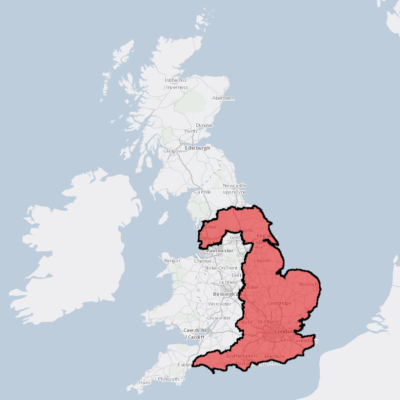
- Overview of BTV cases and zones
8th September 2026
NSA is encouraging sheep farmers to read two newly published sources of bluetongue guidance before tupping begins, and to treat unverified advice circulating on farm and online with caution. Misinformation leads to decisions that can have negative impacts on a farm business. Using information from trusted sources ensures that farmers can make informed decisions with greater confidence.
The fact checks are at ruminanthw.org.uk/bluetongue-virus-hub and the ram guidance is in the knowledge hub at sheepvetsoc.org.uk
7th September 2026
APHA has published a new dynamic heat map layer showing suspected and confirmed cases this season to help keepers monitor the disease.
25th August 2026
In response to the deteriorating situation in England and Wales and the detection of bluetongue in Scotland, please note the following changes to movement restrictions:
- from 22nd August 2026 the ‘4 day’ rule for Scottish animals attending a show/sale in a RZ area is suspended, this condition is replaced by a ‘1 day’ rule meaning animals must travel to and from a RZ area in a single day, and must be unloaded after sunrise and loaded before sunset
Movement controls from 10th September 2026:
- All BTV susceptible animal traveling from a RZ area to Scotland, to live, or from any Temporary Control Zone (TCZ) in Scotland to elsewhere in Scotland to live, must be vaccinated for BTV-3.
- Cattle must be vaccinated using the ‘Bultavo-3’ product.
- All other species may be vaccinated with any BTV-3 vaccine product.
- Certain breeding animals will still require a PCR test if moving from a RZ or TCZ area to a BTV-3 free area of Scotland, these include: all breeding males (except cattle and sheep), pregnant cows/heifers, deer or camelids.
- Relaxation of current movement restrictions intended to come into force on 10 September remain under constant review.
21st August 2026
Will you be vaccinating against bluetongue in 2027?
NSA is gathering the numbers manufacturers need to plan production, so that vaccine is there when you want and need it. This short survey takes less than five minutes to complete, and your answers will help influence availability.
Your answers stay confidential and will be reported only as combined figures.
Have your say by 31st August.
Click here to complete the survey.
20th August 2026
As of the 20th August, a Temporary Control Zone (TCZ) has been declared with movement restrictions in place within this Temporary Control Zone on animals, embryos, ovum or semen.
An interactive map with details of the TCZ can be found here.
The Government has offered this advice to keepers:
- Speak to your private vet about BTV vaccination to reduce the impact of BTV on your animals.
- If you suspect signs of any notifiable diseases, you must immediately notify your local APHA office. Failure to do so is an offence.
- Source animals responsibly, be aware of animals BTV vaccination status and if the source area is affected by bluetongue.
- Source germinal products responsibly, BTV can be spread through germinal products.
- Be aware of the current disease situation in exporting countries.
- Request a pre-export PCR test for epizootic haemorrhagic disease (EHDV) and BTV before animals are exported.
- Ensure any animals imported have the correct paperwork and are compliant with the conditions in the export health certificate.
- Keep any susceptible animals that have been imported separate from other animals whilst under restriction.
15th August 2026
NSA South West Regional Manager, Ian May, has kindly shared a case study based on his experience of bluetongue as a North Devon sheep farmer. Read the case study here.
12th August 2026
It is clear how severe an impact BTV-3 is having on livestock industries in the UK this year.
Ruminant Health & Welfare, AHDB, SVS and the BCVS have collaborated on an industry-led survey to understand how bluetongue has affected farmers.
They want to hear from all farmers to understand how BTV has impacted flocks and herds whether you have had confirmation of bluetongue in your livestock or not.
They are also interested to hear your views on vaccinating against BTV, so the industry can support and prepare for the disease’s on-going impact.
Responses are anonymous unless you choose to provide further information. The survey only asks for your farm’s postcode to help map responses by area.
If you manage more than one farm, please complete a separate survey for each.
Complete the survey now by clicking here.
10th August 2026
A single case of BTV-3 has been found in south west Scotland.
According to updates from gov.uk, there have been 289 cases of BTV-3 in the UK in the 2026 to 2027 bluetongue season. This includes:
- 283 cases in England
- 5 cases in Wales
- 1 case in Scotland
- 0 cases in Northern Ireland
There have been no cases of BTV-8 in the 2026 to 2027 bluetongue season.
163 of these cases have been in Devon, 61 in Cornwall and 42 in Somerset.
503 cases have been within sheep, 107 in cattle and one in llama.
7th August 2026
NSA is advising vendors to vaccinate for bluetongue for the forthcoming sales season.
Phil Stocker, NSA Chief Executive says: "There is nothing to suggest this season's sales are going to be anything but strong, but there are a few concerns in the industry, particularly around bluetongue. NSA is encouraging vendors to consider vaccinating sheep prior to sending them to sales. From conversations we have had, buyers may be likely to view sheep vaccinated against BTV favourably."
Farmers should plan ahead as vaccinations are available but need pre-ordering and it may not be available off the shelf from vet practices.
3rd August 2026
BTV-3 cases continue to expand rapidly
NSA is urging sheep farmers not to be complacent but to follow the lead of growing numbers of farmers and speak to their vets about assessing the risks of BTV-3 in their flocks and taking action to protect animals.
NSA Chief Executive Phil Stocker commented: “This will inevitably lead to a conversation about vaccination as this is the only proven way of protecting stock on the farm, and also protecting the wider industry as we approach a time when movements of breeding stock and store lambs will be increasing.
"The number of reported cases shot up last week to over 590, from 115 the previous week and the majority are being seen in the South West of England – clearly a serious hot spot for this midge borne virus. As you would expect, calls on stocks of vaccine are increasing and stocks will be reducing but we are assured that vaccine manufacturers are doing what they can to ensure demand can be met.
"I've heard some farmers question if it is worth vaccinating now given that it takes 28 days for full immunity to be gained, but a level of protection is likely to be reached earlier, particularly if stock were vaccinated last season. Additionally we have several months of midge activity ahead of us and it is highly advisable that breeding males and females are vaccinated ahead of mating. This is just basic advice when administering any vaccine and nothing specific to BTV vaccines – there is nothing to suggest these vaccines impair fertility beyond a short period when body temperature will naturally rise”.
As always the NSA would encourage all sheep farmers to speak with their vets to determine the best course of action. We would also encourage the reporting of any new cases on previously unaffected farms to be reported so that evidence and data can be captured, and that records be kept on farms of numbers of cases, levels of severity, mortality and recovery rates. This data may be helpful in due course to assess the impact and inform future actions.
31st July 2026
A worrying trend in rising Bluetongue cases is leading to farmers inquire about vaccination.
A spike in cases has been seen in north Devon, with a smaller number of cases through the West Midlands into eastern Wales and as far north as Preston. So far, all the cases are strain 3.
Commencing the week of the start of the new vector season - 29th June 2026 - numbers in England are as follows:
Week 1 = 5 BTV calls
Week 2 = 17 BTV calls
Week 3 = 49 BTV calls
Week 4 = 155 BTV calls
Week 5 = 590 as of Thursday afternoon
APHA has reported 28 negative reports and 57 confirmed reports and 234 investigations ongoing.
Michael Priestley, NSA Policy Manager said: “It appears we may be seeing Bluetongue flare up this summer and the virus really work its way around livestock. The number of cases in sheep is higher, about 2.5 times the number seen in cattle, which could reflect vaccine take up. The advice is for sheep keepers to liaise with their vets, assess risk and look at vaccination. Vaccination is the only practical tool to mitigate the risk.”
You can find updates on the bluetongue situation with APHA here.
Additional information on the outbreak, movement legislation and options for dealing with the disease are available here.
24th July 2026
An alarming increase in positive bluetongue cases is causing concern with 29 cases in confirmed in England over the last two weeks, 15 of which have been in sheep. This is significantly higher than this time last year. The South West of England appears to be a particular hotspot currently with a high proportion of cases confirmed in the Exmoor area.
Along with fewer vaccination levels this season, this is causing serious concern. Farmers are encouraged to speak to their vets and consider vaccination. Vaccines are still considered to be effective for 12 months, so revaccination for many will be due.
NSA would also remind keepers that blood samples being submitted need to be clearly labelled with the full individual IDs, the same is relevant for vaccination reporting.
This is according to the latest Defra update (22nd July) available to read here.
Scotland remains bluetongue free and Northern Ireland has had no cases in the 2026/27 season.
5th May 2026
Scottish Government has announced it has reviewed the BTV movement licences for moves from a Restricted Zone (RZ) to Scotland to live, for the high-risk period in Scotland (1st June to 9th September).
It is hoped the new approach will be more flexible for industry.
The EXD597 specific licence has now been retired. The EXD645 pro forma for movements from a RZ to live in Scotland is still in use. The EXD608 general licence has been changed to accommodate movements of all animal categories from a RZ to Scotland to live.
Sales/collections centres operators are still required to endorse the general licence after verifying the animals are accompanied by the pro-forma and associated evidence.
There is also a new condition that any animal moving from a RZ to Scotland to live (not slaughter animals) must be treated with an insecticide pour-on within 7 days of a move to, or back to Scotland, except for cattle treated with bultavo-3, in order to reduce the risk of midges being able to survive past the incubation period, should they bite an animal that picked up infection whilst in the RZ.
Key points:
For RZ naturalised animals to move to Scotland to live
- EXD645 pro forma completed by keeper ahead of move to Scotland, gathering supporting evidence of (if applicable); negative PCR/ELISA test results/dates, vaccine purchase/dosage and insecticide pour-on treatment.
- The move must be logged on the APHA portal – (EXD645 + supporting evidence) – **Keepers should note reference number at point of application and give it to the sale/collection centre**
- Keeper prints copy of EXD645, inputs APHA portal reference number, and copies supporting evidence, which forms the ‘EXD645 form pack’ that accompany the animals, (or sent ahead to new keeper prior to movement)
- Market/collection centre operators in a RZ, must endorse the EXD608 general licence stating that a EXD645 form pack(s) are present and correct, also indicating destination premises when known
- Scottish market/collection centres should confirm animals entering their premises are compliant with conditions of the EXD608 and are accompanied by a valid EXD645 form pack, and passing that information to the end keeper
- Only animals moved to Scotland to live from the RZ require the pour on insecticide, which must be done according to the label. Keepers must observe withdrawal periods if animals diverted to a slaughterhouse. Bultavo-3 vaccinated cattle are exempt from insecticide requirement.
- The final keeper in Scotland should receive a copy of the ‘EXD645 form pack’, also the APHA portal reference number which may require uploading to ScotEID
Scotland sourced animals attending Show/Sale that return to Scotland
- EXD645 not required (until 4 day limit in a RZ is surpassed for anything other than bultavo-3 treated cattle)
- Show operator must endorse EXD608 general licence confirming animals spent <4 days in RZ, or are bultavo-3 vaccinated cattle (using ScotEID info or vaccine invoice/medicine record)
- All animals require an insecticide pour on treatment within 7 days of the move back to Scotland, other than Bultavo-3 vaccinated cattle
11th March 2026
Revised Proposed Disease Control Strategy for Scotland in 2026
Vaccination
- All bluetongue-susceptible animals moving from a RZ to Scotland to live, should be vaccinated for BTV-3 in line with a products label, with 21 days elapsing since completion of the primary course.
- Animals moving from Scotland into a RZ can only return to Scotland if vaccinated.
- Bovines must be vaccinated for BTV-3 using Bultavo-3 to move to Scotland to live.
- Animals that are unable to be vaccinated must be tested for bluetongue ahead of a movement from a Restricted Zone to Scotland and within 7 calendar days of the move occurring.
- It is strongly recommended that all bluetongue susceptible animals (sheep, cattle, goats, camelids, and other ruminants) are vaccinated for BTV-3.
Movement to live general conditions
- All bluetongue susceptible animals, prior to move from an RZ to Scotland, should be fully vaccinated for BTV-3, with 21 days elapsing since completion of the primary/booster course in line with the product label.
- Animals moving from Scotland to a RZ may only return to Scotland if vaccinated.
- Bovines must be vaccinated using Bultavo-3.
- Any unvaccinated animals must be PCR tested within 7 days of the move, prior to a movement to Scotland from an RZ.
- No animal(s), regardless of being vaccinated or having tested negative for bluetongue, may move to Scotland to live from a premises where a BTV positive animal has been detected in the last 6 months.
Moves to shows/markets – Scotland to an RZ and returning to Scotland
- The previous allowance of a four day period inside an RZ is withdrawn for 2026.
- Animals moving from Scotland into a RZ can only return to Scotland if vaccinated.
- All bluetongue susceptible animals moving into Scotland from other UK countries must be vaccinated for BTV-3, in line with a products label, with 21 days elapsing since completion of the primary/booster course.
- Bovines must be vaccinated for BTV-3 using Bultavo-3, all other species may use any BTV-3 vaccine.
- Any unvaccinated animals must be PCR tested with negative results within seven calendar days of the move, prior to a movement to Scotland from an event within the Restricted Zone
5th March 2026
DAERA and DAFM announce reciprocal Bluetongue derogations to ease trade (Northern Ireland update)
Agriculture Ministers on both sides of the border have today moved to lift animal movement restrictions for breeding and production which were introduced following the Bluetongue outbreaks in both jurisdictions.
Following extensive stakeholder engagement, Northern Ireland Agriculture, Environment and Rural Affairs Minister Andrew Muir and Irish Minister for Agriculture, Food and the Marine, Martin Heydon have authorised derogations that will allow for the recommencement of cross border movements of Bluetongue susceptible species like cattle and sheep from 9am on Friday 6th March.